Families in Northwest Houston face a familiar crossroads when a mom or dad begins missing medications, avoiding meals, or getting reversed on roadways they as soon as drove with self-confidence. The same city that holds your history-- Friday football at Cy-Fair, peaceful early mornings in Tomball, vacation traffic on 290-- can end up being a labyrinth. The question shifts from "Can Mom remain at home?" to "What kind of senior care will assist her thrive?" The answer frequently falls into two courses: assisted living and memory care. They share a structure of support and safety, but the daily experience, staffing proficiency, and physical environment vary in meaningful ways.
I have strolled this choice with households more times than I can count, in some cases over coffee at a cooking area table, other times during a hurried health center discharge. What follows is a practical, Northwest Houston grounded guide that describes the differences, the trade-offs, the expenses, and the signals that assist you choose not simply an excellent community, but the best one for your enjoyed one.
What assisted living truly offers
Assisted living is developed for older adults who want the ease of senior living with a safeguard for daily tasks. House cleaning, meals, and social programs are the base. Caretakers offer aid with activities of day-to-day living-- bathing, dressing, grooming, medication pointers-- and nurses oversee care plans. The model assumes a resident who can make fundamental decisions, take part in activities, and call for assistance. In many Northwest Houston communities, citizens reside in studio or one-bedroom apartments with personal bathrooms and little kitchenettes. They bring their furnishings, pictures, and the quilt that has actually seen years of family holidays.
A typical early morning in assisted living might look like this. Your dad wakes to a soft knock and a caregiver who aids with compression socks and blood sugar checks. After breakfast, he signs up with a group heading out to a local coffee shop on Jones Roadway or a veterans' group meeting. The nurse touches base about last night's sleep and coordinates with his cardiologist for a med modification. He has self-reliance with support integrated in, but the day is still his to shape.
Assisted living works best when the primary need is physical support, not consistent supervision. Residents might have moderate lapse of memory, however they can follow a regular with restricted cueing. They benefit from easy social connection, a smaller sized home to handle, and reputable help just a button call away.
Where memory care differs
Memory care is a various community, designed for individuals coping with Alzheimer's disease or other types of dementia. The environment is simplified to decrease confusion-- clear wayfinding, purposeful lighting, contrasting colors for depth understanding, safe and secure yards-- and the day unfolds with more structure. Staffing ratios are tighter, with caretakers trained in redirection, de-escalation, and the subtleties of dementia interaction. The objective is convenience, self-respect, and engagement customized to an altering brain.
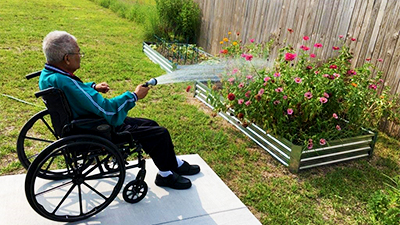
If assisted living is an apartment building with a helpful concierge and nursing support, memory care is a smaller neighborhood where everyone understands amnesia and constructs the regular around it. A resident who attempts to leave the structure at 2 a.m. will find a calm caregiver who understands his story, where he used to work, and how to assist him towards a quiet space and a cup of tea. Activities use long-held abilities-- familiar hymns, folding towels, watering raised beds, little baking projects that trigger smell and memory. The day follows a rhythm that helps reduce sundowning and agitation.
Memory care isn't a "last resort." Succeeded, it is a proactive option that restores safety and minimizes the strain of consistent alertness on households. Some communities in Northwest Houston operate devoted memory care homes, others use protected wings. Either can work if the program is strong and the personnel stable.
Respite care as a low-risk trial
If you feel stuck, think about respite care. Numerous assisted living and memory care communities provide supplied stays from a few days to a couple of weeks. Families use respite care after healthcare facility stays, throughout caretaker travel, assisted living or just to check whether a neighborhood is the right fit. I have seen households find that a parent who resisted moving actually illuminate with brand-new regular and companionship. Respite also provides a real-world assessment: does Mom sleep much better with nighttime checks, does Dad consume more when meals are in a dynamic dining room, do falls decrease when the shower has integrated support?
Respite can be especially useful in Northwest Houston during hurricane season. A short-term stay makes sure backup power, meals, and personnel on site if storms knock out area facilities. Consider it as a safety valve and an opportunity to gather information, not a commitment to long-term change.
The key differences at a glance
Here is the practical contrast many families request for, distilled to the everyday:
- Assisted living centers on help with daily living and health oversight, with a resident who can still make choices and stay oriented in a typical house setting. Memory care is built around cognitive assistance, consistent supervision, and an environment that prepares for confusion or wandering. Staffing in assisted living tends to be leaner, with caregivers covering larger groups, while memory care generally designates less homeowners per caretaker and supplies targeted dementia training. Activities in assisted living assume independent participation-- physical fitness classes, outings, conversation groups-- while memory care utilizes smaller sized groups, sensory-based engagement, and short, foreseeable sessions. Safety functions in assisted living concentrate on fall prevention, call systems, and routine checks. Memory care uses regulated access, protected outdoor areas, and develops that limitation overstimulation and exit-seeking. Costs in our area typically vary by 15 to 35 percent, with memory care the higher investment due to staffing intensity and protected design.
That last point deserves more detail.
What senior care costs in Northwest Houston
Pricing changes by neighborhood, home size, and the level of care required. Broadly speaking, you can anticipate:
Assisted living: Regular monthly rates often begin around the mid to high $3,000 s for a studio, with care costs layered on a point system. For locals requiring moderate assistance-- bathing several times a week, medication management, accompanying to meals-- households commonly see totals in the $4,000 to $5,500 variety. Bigger homes, greater care levels, and in-room dining or extra escorts contribute to the figure.
Memory care: Since of staffing and protected environments, monthly rates usually start around the mid $5,000 s and can vary to the low $7,000 s, in some cases greater for intricate medical requirements. Some memory care programs provide complete rates, others still use tiers or points.
Business Name: BeeHive Homes Assisted LivingAddress: 16220 West Rd, Houston, TX 77095
Phone: (832) 906-6460
BeeHive Homes Assisted Living
BeeHive Homes Assisted Living of Cypress offers assisted living and memory care services in a warm, comfortable, and residential setting. Our care philosophy focuses on personalized support, safety, dignity, and building meaningful connections for each resident. Welcoming new residents from the Cypress and surround Houston TX community.
16220 West Rd, Houston, TX 77095
Business Hours
Monday thru Sunday: 7:00am - 7:00pm
Facebook: https://www.facebook.com/BeeHiveHomesCypress
beehivehomes.com senior care
Respite care: Per-day pricing generally runs greater than the pro-rated regular monthly rate since it includes furnishings and short-notice staffing. In Northwest Houston, families typically pay between $175 and $275 each day, depending on care needs.
These figures move with market conditions, specials, and the specifics of each neighborhood. Always ask for a composed breakdown: base rent, care level, medication administration fees, incontinence supplies, and any move-in deposit or community charge. Clarity upfront prevents costs shock later.
How to tell which course fits your parent
Families typically feel torn when a loved one resides in the fuzzy happy medium: not completely independent, not certainly in need of a protected memory program. The most beneficial concerns lean on safety, insight, and trajectory.
Consider these 5 signs that memory care might be the more secure choice:
- Patterns of wandering, exit-seeking, or getting lost, particularly if it has actually taken place more than once or consists of efforts at night. Limited insight into personal requirements. For instance, a moms and dad insists they took medications however consistently misses out on doses, or rejects a fall that clearly happened. Challenges with sequencing that interfere with daily function, such as putting a remote in the freezer or trying to cook without turning on the stove correctly. Escalating habits that caregivers struggle to redirect at home or in assisted living: agitation at sundown, suspicion of theft, quick mood swings. Nutrition and health declining in spite of reminders, leading to weight loss, dehydration, or infections.
If none of these are present and your loved one engages well, follows cues, and takes pleasure in social programs, assisted living might be the much better preliminary step. Some communities provide bridges-- specific programs within assisted living for homeowners with moderate cognitive disability. These can purchase time and preserve autonomy without jumping to a totally secured environment, though they are not replaces when security is at risk.
What a day can seem like: 2 vignettes
A Northwest Houston assisted living morning Mr. Valdez, retired from the oilfield, moved into assisted living off Louetta after too many falls in the house. He keeps a small apartment with his Astros caps and an old map of the Permian Basin on the wall. After breakfast, he signs up with chair yoga, then fulfills the driver for a fast journey to the barber on Spring Cypress. A caregiver helps with his new compression socks and checks his blood pressure. He takes a snooze, views the afternoon game in the neighborhood lounge, then FaceTimes with his child. His memory slips periodically, however routine keeps him steady.
A Northwest Houston memory care afternoon Mrs. Nguyen, a previous instructor who taught 3rd grade in Cypress for thirty years, lives in a memory care cottage near her church. Early afternoons bring a music hour, where staff play the 60s favorites she hums along to even on difficult days. A caretaker guiding her through folding warm towels take advantage of muscle memory and pride. She wanders toward the yard gate often, but the latch is discreetly protected. When she grows restless near sunset, the staff uses a photo book from her classroom days, made by her boy. She relaxes, then signs up with a small group rolling dough for hand pies baked in the activity cooking area, the scent filling the hallway.
These aren't significant stories. They are regular rhythms adjusted to each person's needs. That calibration is the difference you feel most in between assisted living and memory care.
Safety and design information that matter more than brochures
Walk any two communities in Northwest Houston and you will see what pictures flatten. In assisted living, try to find restrooms with zero-threshold showers, strong grab bars, and room for a caregiver to assist safely. Notice carpet edges and shifts that might capture a walker. Check the height and lighting of call buttons, and confirm staff action times in the evenings when activity is high.
In memory care, design does heavy lifting. Halls that loop reduce dead ends and agitation. Shadowboxes by doors assist residents recognize their spaces. Dining-room with limited visual clutter assistance people focus on consuming. Outside yards need to be truly secure, with smooth courses and shaded seating-- the summertime heat here is no joke. Inquire about nighttime staffing, not simply day shift, due to the fact that lots of dementia habits intensify between 5 p.m. and 2 a.m.
Staffing: ratios, period, and training
You will hear staffing ratios considered, frequently as marketing shorthand. Ratios matter less than three things: how stable the team is, how they are trained, and how the nurse covers the building.
Tenure tells you whether staff feel supported. When I see numerous caregivers who have actually been there 3 or more years, families tend to report smoother care. For training, ask how typically the team practices genuine situations: redirecting without arguing, managing aggressive outbursts, cueing for showering with self-respect. In memory care, formal dementia training at hire and ongoing refreshers every few months are sensible expectations.
Nursing coverage differs. Some assisted living buildings have an LVN or registered nurse on site day-to-day with on-call after-hours, others have nurses covering multiple sibling sites. In memory care, I prefer a nurse physically present most days, with clear protocols for changes in condition and close relationships with hospice and home health firms. Emergencies are unusual, but when they occur, you want a nurse who understands your parent.
Medical intricacy: when health needs override setting preferences
Diabetes with regular blood sugar level swings, oxygen requirements, complex wounds, or medications that need timing and monitoring can extend assisted living. Some structures manage this well, especially if they have strong relationships with checking out nurses and doctors. Others prefer to keep medical complexity low for safety and consistency. Memory care programs frequently deal with moderate medical needs so long as the resident's habits can be managed safely. Once requires intensify-- frequent two-person transfers, ventilators, or continuous IV medications-- an experienced nursing center might be the ideal level.
If your parent is on the edge, ask the nurse to examine the specific care tasks. Get specific: can you handle insulin pens with sliding scales, what about blood glucose checks three times daily, do you allow oxygen concentrators at night, who alters a wound dressing and how often? Clear responses secure both dignity and safety.
Cultural fit, faith, and the convenience of familiarity
Northwest Houston is a patchwork of cultures and parishes. In senior care, that variety is a strength when it appears in the dining-room and activity calendar. Food matters. A kitchen area that will prepare caldo de pollo the method your granny made it, or offer rice and fish on Lenten Fridays, earns commitment far beyond any marketing guarantee. Look for bilingual staff if your parent is more comfy in Spanish or Vietnamese. Ask about transport to familiar churches, synagogues, or mosques. If a neighborhood hosts on-site services or study groups, being in. The tone in the space tells you whether your moms and dad will feel at home.
Family roles after the move
Choosing senior care does not sideline household, it reallocates energy. Rather of costs mental bandwidth on whether Mom fell during a solo shower, you get to spend time on the important things that still light her up-- checking out picture albums, gardening in the yard, or sitting quietly with a preferred book. Develop a rhythm: one family member visits on Tuesdays, another calls the nurse every other Thursday for a fast upgrade, a grandchild joins Saturday bingo twice a month. Consistency develops relationships with personnel, which enhances interaction and responsiveness.
If your moms and dad moves into memory care, bring the life story into the building. A one-page photo with a photo, a few essential tasks, preferred music, cherished individuals, and recognized triggers helps personnel link. In a busy moment, that sheet advises a new caregiver that your dad was a mechanic who values useful humor and dislikes cold water on his face. Little insights avoid big missteps.
Avoiding typical pitfalls during tours
Three mistakes appear often during the search procedure, and they are simple to sidestep if you name them early.
The initially is shopping only on aesthetics. A gleaming chandelier does not alter staffing ratios. Focus on whether citizens look engaged, whether call lights call constantly, and whether personnel greet people by name.
The second is attempting to time the move completely. Households frequently want to keep a moms and dad in the house "a little longer" and wind up moving throughout a crisis. A planned relocation earlier usually indicates better modification and fewer medical facility readmissions. Waiting until numerous emergency room gos to forces choices under pressure.
The third is ignoring the role of the executive director and nurse. Strong management makes everything else work much better. Inquire about their tenure, how they deal with staffing lacks, and how they interact when things fail. Everyone looks excellent on tour day; leadership reveals when the unforeseen happens.
The emotional side of moving
Even when the logic is clear, modification brings sorrow. I have actually sat with sons who felt like they were breaking a guarantee to keep Dad in the house, and children who fought back tears while labeling picture frames for move-in day. It assists to call the emotion and honor what is being lost, which is typically the idea of home as much as the place itself. Then look for what you are gaining: reputable meals, a safe shower, buddies within a corridor's walk, a team that knows how to manage sundowning at 6 p.m. in August when the heat has drained pipes everyone's patience.
Adjustment requires time. In assisted living, the majority of residents settle within 2 to six weeks. In memory care, the first 10 days can be bumpy as routines shift and the environment changes. Remain in close contact with the nurse, interact what works at home, and offer it a real possibility before making a judgment.
Making the call when brother or sisters disagree
Families rarely move in lockstep. One brother or sister might favor assisted living as a gentle first step, another pushes for memory care after experiencing behaviors the others have not seen. When differences stall action, generate a neutral specialist-- a geriatric care manager, social employee, or the primary care physician who has actually seen the progression. Request for concrete observations connected to security: falls, medication adherence, wandering, weight changes. Data relaxes viewpoint. A respite stay can also serve as the tie-breaker, providing everybody proof from the same setting.
What to ask on your next tour
Use this short list to keep discussions focused during trips in Northwest Houston:
- How do you choose between assisted living and memory care for a new resident, and what indications trigger a transition later? What is your night staffing, and how do you manage sundowning or nighttime agitation? How do your nurses communicate changes in condition to households, and how quickly? Can you share the period of your core care team and the executive director? Do you accept and support residents on hospice, and how do you collaborate with outside providers?
Five questions, addressed plainly, reveal the backbone of a neighborhood. You will hear positive, specific examples in strong structures, and vague generalities in weaker ones.
When both can be right
Some senior citizens begin in assisted living and later shift to memory care within the same school. That continuity assists. Familiar corridors, known staff, and a constant dining style soften the change. If you presume memory decrease will progress, prefer neighborhoods with both alternatives on site. If the spending plan is tight and the very best memory care is throughout town from the very best assisted living you can pay for, factor in the likelihood of moving once again within one to 2 years. A 2nd move is workable, but preparing for it minimizes stress.
The promise at the heart of senior living
Assisted living and memory care share an objective: to let older grownups deal with as much independence, connection, and self-respect as possible. The right setting gives back what home often can not after a specific point-- foreseeable meals, safe showers, pals to sit with after lunch, personnel who observe when something has actually moved. The very best communities in Northwest Houston feel like neighborhoods, not facilities. You sense it in the easy small talk in between residents and personnel, the way the nurse kneels to eye level to talk, and the smell of lunch that in fact makes you hungry.
If you are weighing options today, begin with a truthful list of your parent's needs and your family's capability. Visit at odd hours, not just at 10 a.m. Ask to see a care strategy template. Try a respite stay if you are on the fence. And remember that this decision is not a decision, it is a plan you can modify as requirements change.
Senior care, at its best, supports the whole household. Assisted living, memory care, and respite care are tools, not destinations. Choose the one that lets your loved one feel safe sufficient to be themselves, and that lets you return to being a son, daughter, or partner more than a full-time caretaker. In an area as large and differed as Northwest Houston, that match is out there. The best door opens to a life that feels steadier, kinder, and more connected-- and that is what this chapter deserves.
BeeHive Homes Assisted Living is an Assisted Living Facility
BeeHive Homes Assisted Living is an Assisted Living Home
BeeHive Homes Assisted Living is located in Cypress, Texas
BeeHive Homes Assisted Living is located Northwest Houston, Texas
BeeHive Homes Assisted Living offers Memory Care Services
BeeHive Homes Assisted Living offers Respite Care (short-term stays)
BeeHive Homes Assisted Living provides Private Bedrooms with Private Bathrooms for their senior residents
BeeHive Homes Assisted Living provides 24-Hour Staffing
BeeHive Homes Assisted Living serves Seniors needing Assistance with Activities of Daily Living
BeeHive Homes Assisted Living includes Home-Cooked Meals Dietitian-Approved
BeeHive Homes Assisted Living includes Daily Housekeeping & Laundry Services
BeeHive Homes Assisted Living features Private Garden and Green House
BeeHive Homes Assisted Living has a Hair/Nail Salon on-site
BeeHive Homes Assisted Living has a phone number of (832) 906-6460
BeeHive Homes Assisted Living has an address of 16220 West Road, Houston, TX 77095
BeeHive Homes Assisted Living has website https://beehivehomes.com/locations/cypress
BeeHive Homes Assisted Living has Google Maps listing https://maps.app.goo.gl/G6LUPpVYiH79GEtf8
BeeHive Homes Assisted Living has Facebook page https://www.facebook.com/BeeHiveHomesCypress
BeeHive Homes Assisted Living is part of the brand BeeHive Homes
BeeHive Homes Assisted Living focuses on Smaller, Home-Style Senior Residential Setting
BeeHive Homes Assisted Living has care philosophy of “The Next Best Place to Home”
BeeHive Homes Assisted Living has floorplan of 16 Private Bedrooms with ADA-Compliant Bathrooms
BeeHive Homes Assisted Living welcomes Families for Tours & Consultations
BeeHive Homes Assisted Living promotes Engaging Activities for Senior Residents
BeeHive Homes Assisted Living emphasizes Personalized Care Plans for each Resident
People Also Ask about BeeHive Homes Assisted Living
What services does BeeHive Homes of Cypress provide?
BeeHive Homes of Cypress provides a full range of assisted living and memory care services tailored to the needs of seniors. Residents receive help with daily activities such as bathing, dressing, grooming, medication management, and mobility support. The community also offers home-cooked meals, housekeeping, laundry services, and engaging daily activities designed to promote social interaction and cognitive stimulation. For individuals needing specialized support, the secure memory care environment provides additional safety and supervision.How is BeeHive Homes of Cypress different from larger assisted living facilities?
BeeHive Homes of Cypress stands out for its small-home model, offering a more intimate and personalized environment compared to larger assisted living facilities. With 16 residents, caregivers develop deeper relationships with each individual, leading to personalized attention and higher consistency of care. This residential setting feels more like a real home than a large institution, creating a warm, comfortable atmosphere that helps seniors feel safe, connected, and truly cared for.Does BeeHive Homes of Cypress offer private rooms?
Yes, BeeHive Homes of Cypress offers private bedrooms with private or ADA-accessible bathrooms for every resident. These rooms allow individuals to maintain dignity, independence, and personal comfort while still having 24-hour access to caregiver support. Private rooms help create a calmer environment, reduce stress for residents with memory challenges, and allow families to personalize the space with familiar belongings to create a “home-within-a-home” feeling.Where is BeeHive Homes Assisted Living located?
BeeHive Homes Assisted Living is conveniently located at 16220 West Road, Houston, TX 77095. You can easily find direction on Google Maps or visit their home during business hours, Monday through Sunday from 7am to 7pm.How can I contact BeeHive Assisted Living?
You can contact BeeHive Assisted Living by phone at: 832-906-6460, visit their website at https://beehivehomes.com/locations/cypress/,or connect on social media via Facebook
BeeHive Assisted Living is proud to be located in the greater Northwest Houston area, serving seniors in Cypress and all surrounding communities, including those living in Aberdeen Green, Copperfield Place, Copper Village, Copper Grove, Northglen, Satsuma, Mill Ridge North and other communities of Northwest Houston.